Top 10 Tips For Testing Equipment For PAT in Stoke on Trent
The selection of the testing equipment, their use and maintenance are the foundation of any efficient and complies with Portable Appliance Testing (PAT ) program in the UK. While the skill of the technician is crucial, their ability to perform exact and reliable safety tests is dependent on the high-quality of their equipment, its calibration, and the proper application of their test instruments. The equipment must be able to conduct the electrical tests as required in the IET Code of Practice for the In-Service testing and inspection of electrical Equipment. This code is the standard industry-wide for best practices. Every tool, from a advanced portable appliance tests to a simple voltage gauge, plays an important role in verifying electrical equipment safety. It is essential for those in charge to be aware of the capabilities, limits and legal requirements of this equipment in order to make sure that their test regimes are not only executed but are also technically solid and legally valid under the Electricity at Work Regulations, 1989.
1. Portable Appliance Tester Tester in Stoke on Trent
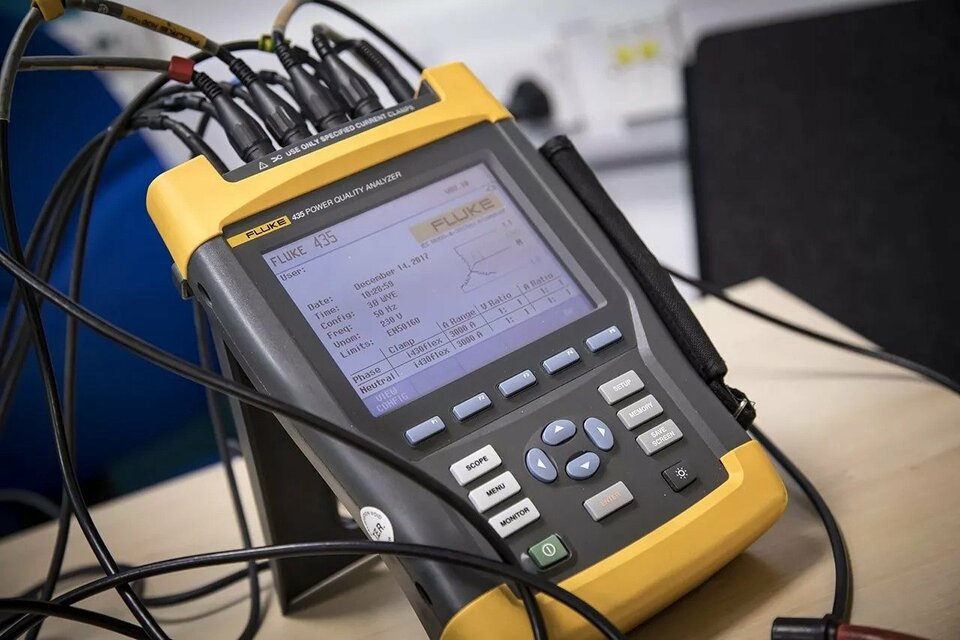
It is the primary device, an automated safety test instrument. Modern testers range from basic models that perform tests for earth continuity, insulation resistance tests and lead-polarity tests. They also include advanced models that offer additional tests, such as load/run, earth leakage, or touch current. It is important to be able to conduct leakage tests, or soft tests on sensitive equipment with electronic components such as computers and printers. This helps to safeguard against the damaging effects of high voltages utilized in traditional tests for insulation resistance. The choice of tester should match the requirements of the equipment being tested.
2. Annual calibrations are required by UKAS accredited laboratories. in Stoke on Trent
It is not possible to compromise on conformity. The United Kingdom Accreditation Service, or UKAS will be able to verify that the PAT tester has been regularly calibrated typically once per year, by reputable labs. This calibration verifies the accuracy of the device and the traceability of the instrument to national standards. The service provider must possess a current calibration certificate for each tester they use. Utilizing an uncalibrated or out of calibration instrument renders the test results invalid and offers no protection in the event of an accident.
3. Validity Checks for Functionality and User Checks (Daily/Pre-Use)
The technician must perform daily functional checks, which are often called "user tests" or "verification tests" prior to beginning any testing. The test is carried out using a widely-known "proof load" or set of leads, or other known quality item. If the tester does not deliver the expected results for this known-good item, it indicates a fault in the tester itself and it must not be used until the tester is repaired and recalibrated. This simple check is an essential best practice to make sure that the equipment is functioning correctly at the time of use.
4. The Function of Visual Inspection Equipment in Stoke on Trent
While often neglected Tools that permit an accurate visual inspection are as important as an electronic tester. This includes tools for dismantling plugs and appliances (screwdrivers) as well as a set of the correct fuse ratings to replace them, a label printer or pre-printed labels for identification of assets, and a torch for inspecting dark areas. Most of the faults will be detected at this point. Skimping on the visual process can undermine the entire process of testing.
5. Specificised Test Leads for testing and adapters in Stoke on Trent
A competent technician will have a complete set of adaptors and test leads to interface with any type outlet for appliances. The set includes the standard UK 3-pin plug, IEC adaptors (for testing detachable leads), as well as clips for croc and clamshell to test equipment without plugs (e.g. industrial machines). The set also includes special adaptors for commandso connectors, shaver connectors, and IEC60309 industrial connectors. Inability to connect correctly could result in an inaccurate test being conducted or the test being skipped completely.
6. Earth Bond Test Lead: Its Importance in Class I Equipment
The earth bond is a vital test for Class I appliances (those needing an earth to assure safety). To ensure that a secure connection to the earth circuit is verified it is crucial to select a test lead with a high capacity current (5-25A). Poor-quality leads or those that do not meet the requirements for the test current might give false readings, which could create a deadly risk to safety. It is essential that test technicians use the correct lead for the test.
7. Resistance Testing for Insulation and Voltage Parameters
The insulation resistance test applies an extremely high DC voltage (typically 500 V for most appliances) between live and earth conductors to measure the integrity of the insulation. The technician should be able to determine which voltage to use and when to avoid the test. For example, on equipment equipped with surge protectors (or sensitive electronic components), a substitute leakage test is safer. The equipment must deliver the correct test voltage specified in the IET code of test.
8. Instruments' presets and their Criteria for Pass/Fail in Stoke on Trent
Test instruments that are reputable have pass/fail criteria built in based on limits specified in the IET code of practice (e.g. resistance to earth bonds >0.1O +R, insulation resistance >1MO). Transparency is achieved when the technician knows the limits set by the manufacturer. They should not alter them arbitrarily in an attempt to achieve the desired result. The service provider should be able to confirm that the equipment is set up to meet the industry standards for the same and valid outcomes.
9. Data Management and Reporting Features in Stoke on Trent
Modern PAT testers are equipped with data loggers. They can store hundreds or thousands of test results. These can be downloaded to software for certification, asset lists and failure report generation. Transparent providers will make use of this function to give detailed transparent evidence. Paper-based records made manually are prone to mistakes, loss and falsification. They are not reflective of the highest standards of industry.
10. Secondary Verification: Voltage Indicators and GS38 in Stoke on Trent
While the PAT tester serves as the most important tool, a competent technician will also carry a separate voltage indicator or voltstick to verify dead prior to handling any electrical connections, especially in the case of replacing a plug or determining the cause of a problem. The HSE Guidance Note GS38, specifies design requirements that include finger guards, insulated electrodes and appropriate current fuses. This is a vital layer of security for the person conducting the test. Read the top rated Stoke on Trent compliance services for more examples.
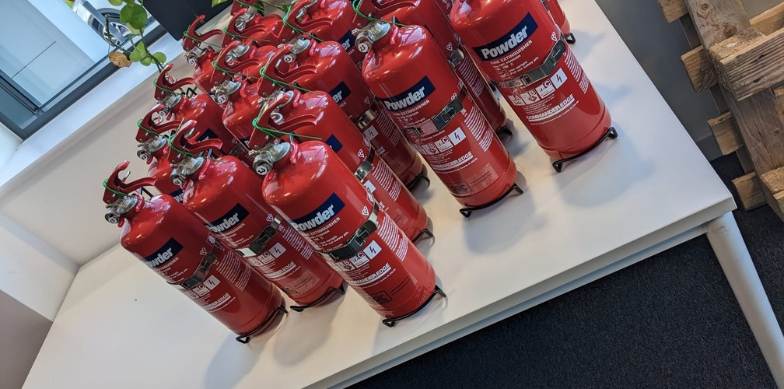
Top 10 Tips For Ensuring The Fire Extinguisher Services Are Compliant With The Laws in Stoke on Trent
The legal framework that governs maintenance of fire extinguishers in the UK is a complete system that ensures the reliability of equipment and safety of the public by providing clearly established legal obligations, detailed technical standards, and certification programs. Fire extinguisher services are subject to strict legal requirements which are defined in the Regulatory (Fire Safety) Order of 2005. Technical standards and third party certification schemes provide an easy compliance PATh. This multi-layered approach puts directly on the "Responsible Person" in each facility to ensure appropriate maintenance and provides clear guidelines for demonstrating the due diligence. This framework is crucial to ensure compliance with the law as well as to ensure fire safety equipment performs as expected in emergency situations.
1. The Regulation Reform (Fire Safety) Order 2005 (FSO) in Stoke on Trent
This legislation forms the foundation of fire safety law in England and Wales, with similar regulations being enacted in Scotland (Fire Scotland Act 2006) and Northern Ireland. Article 17 stipulates that fire-fighting equipment must be "subjected to a suitably maintained system, and maintained in good maintenance and effectiveness." The order places this obligation on the "Responsible Person" (typically the employer, the owner, or occupier of the premises), making them legally accountable for ensuring proper servicing regimes are established and maintained for all fire safety equipment that includes portable extinguishers.
2. British Standard BS 5306-3 (2017)
This standard provides the technical framework to be in compliance with FSO which outlines the particular requirements to commission and maintain portable fire extinguishers. The standard specifies three different types of service: the basic (annual visual inspections and basic inspections), advanced (discharge tests and internal inspections every five years for extinguishers made of powder, water, or foam) and overhaul (pressure testing and internal inspections every 10 years for CO2 fire extinguishers). Compliance with BS5306-3 could be used as a reference to demonstrate an "suitable" maintenance procedure as required by law.
3. Third-Party Certifying Schemes (BAFESP101) in Stoke on Trent
Although not legally required, a provider who is BAFE (British approvals for fire equipment) SP101-certified is the most impressive evidence of due diligence. This certification scheme accredited by the UKAS ensures that the company is in compliance with strict standards of competence for technicians as well as equipment quality, work quality as well as business processes. BAFE Certification is recognized as a strong proof to fire authorities, insurers and courts to prove that an organization has met the FSO’s maintenance requirements.
4. Fire Risk Assessment – What's the role? in Stoke on Trent
Fire Risk Assessments (FRAs) are dynamic documents that are the basis for all fire safety-related decisions, which include extinguisher services. It is required to identify the correct fire-fighting equipment, identify its proper dimensions, type, and Stoke on Trent, and determine the necessary maintenance regimen. FRAs should be reviewed periodically particularly when conditions alter. Any changes have to be taken into account in the servicing schedule. The service provider's reports can be a great source of information to conduct these reviews.
5. Documentation and proof are required. in Stoke on Trent
To prove compliance, thorough documentation is essential. After every service, the company is required to issue a detailed service report, with details of the company and details about the engineer. These documents are to be accessible whenever required by enforcement authorities, such as Fire and Rescue Services and insurance companies. If there is no documents, even if the services have been completed the enforcement action could be initiated.
6. Enforcement Mechanisms and Sanctions in Stoke on Trent
Local Fire and Rescue Authorities perform compliance audits and hold significant enforcement power. If a service requirement is not met, local fire and rescue authorities may issue Alterations Notifications which require modifications to fire safety measures, Enforcement Notices that require improvements to be made within a specified timeframe, or, in the most extreme instances, Prohibition Notes (closing down the premises or imposing immediate restrictions) In the most serious instances, courts can impose unlimited penalties and imprisonment of up to two years for violating the law.
7. Impacts of Insurance in Stoke on Trent
The majority of commercial insurance policies have a requirement for compliance with the fire safety legislation as a condition of policy. Insurance coverage could be invalidated due to inadequate servicing records or providers that are not compliant following the destruction of a large fire. Insurance assessors require servicing records during claims processing. Insurance companies may also require specific certification standards, like BAFE Sp101, as a requirement for protection, particularly in high-risk commercial premises and policies.
8. Technical Competencies in Stoke on Trent
The FSO requires maintenance to be carried out by a "competent individual." While not legally defined, competence generally includes: formal training on BS 5306-3, manufacturer-specific equipment training, practical experience, and understanding of relevant regulations. Through regular tests and audits Third-party certification schemes such as BAFE SP101 verify technician competence.
9. Environmental Compliance in Stoke on Trent
The proper disposal of extinguishers that have been decommissioned and waste materials is covered under environmental laws, specifically the Environmental Protection Act 1990. Service providers are required to be registered waste carriers and must issue Waste Transfer Notes (WTNs) for the equipment that is to be removed. Responsible Persons should ensure that their service provider follows the law when it comes to disposing of their waste.
10. What is the frequency and extent are services required? in Stoke on Trent
The compliance requirement is to adhere to the service frequencies mandated by BS 533-3: the basic service every year for all extinguishers extended service every 5 years for water, foam and powder types and an overhaul every 10 years for CO2 units. Additionally, the Responsible Person must ensure monthly inspections of the visual area are conducted (often assigned to staff) to check for obvious problems like obstructions, damage, or pressure loss. The combination of professional servicing and user inspections creates an efficient maintenance plan. Have a look at the most popular Stoke on Trent fire safety for more info.